Most visitors to the Shri Ram Janmabhoomi Mandir in Ayodhya walk through the Singh Dwar, take darshan of Ram Lalla on the ground floor, and leave. What they miss is that the 70-acre complex is not a single temple. It is a compound of more than a dozen independently consecrated shrines spread across the Parkota wall, the Sapt Mandapam pavilion, and multiple standalone structures, each dedicated to a different deity or sage from the Ramayana.
Fourteen of these were consecrated in a single ceremony on June 5, 2025, on the occasion of Ganga Dussehra, making most of them barely a year old as pilgrimage sites. This is a guide to every temple currently accessible inside the complex and why each one matters.
How the Complex Is Organized ?The Ram Mandir complex sits within the Parkota, a rectangular compound wall that runs 732 meters in length and 14 feet in width. The main temple occupies the center. The Parkota has four corner shrines (one at each corner) and two arm shrines (one in the northern arm and one in the southern arm). Southwest of the main temple sits the elevated Kuber Tila with its own restored shrine. A separate cluster called the Sapt Mandapam houses seven temples dedicated to the sages and figures from Ram's life. And on the complex's grounds stands the Sheshavatar Temple, dedicated to Lakshman. Visitors who enter from the east and exit from the west without detouring to the Parkota corners or the Sapt Mandapam miss roughly two thirds of the consecrated shrines.
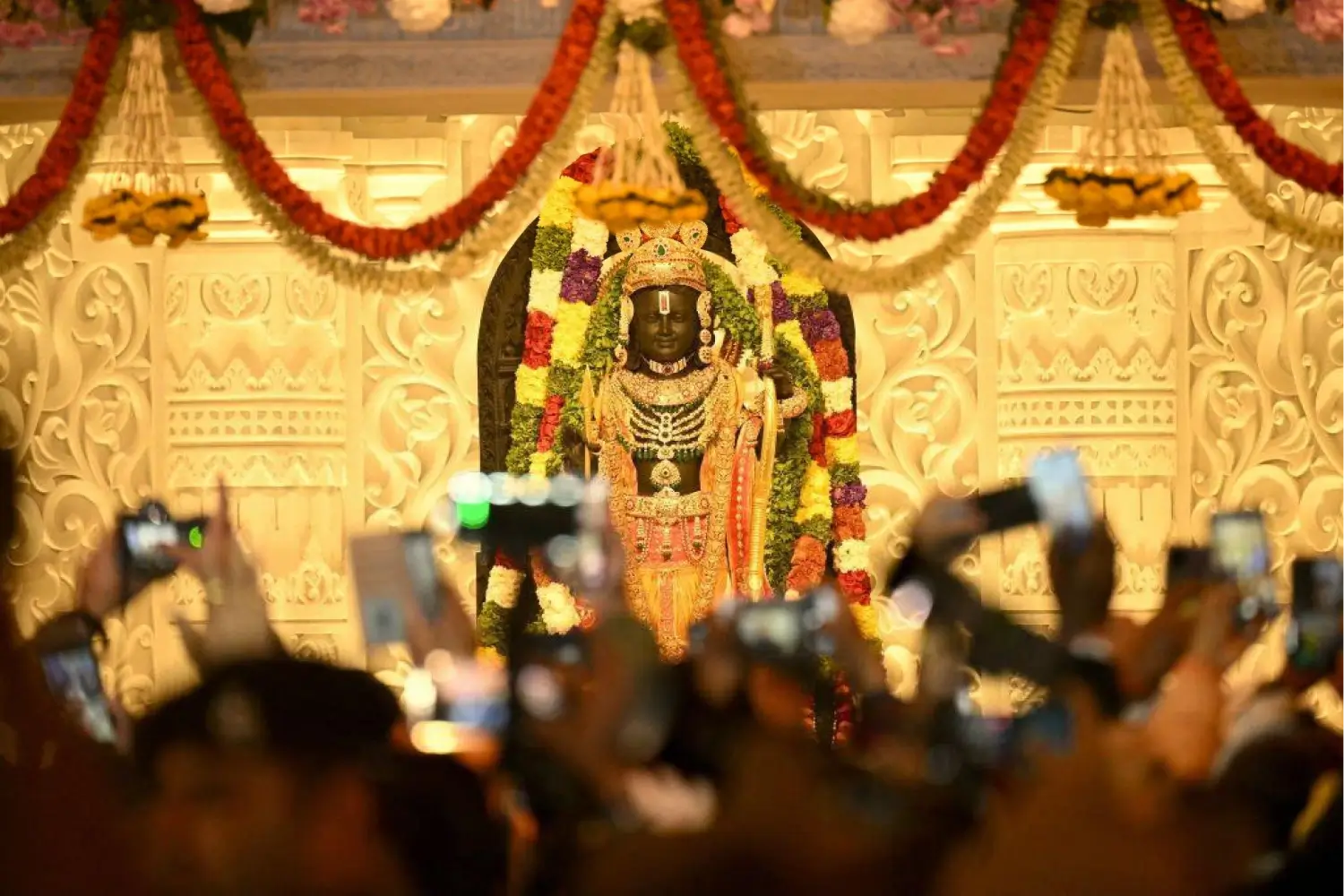
The main temple is the three-storey Nagara-style structure at the heart of the complex. The ground-floor Garbhagriha holds the Ram Lalla idol, a 5-foot figure of Lord Ram at age five carved from Karnataka's Krishna Shila by sculptor Arun Yogiraj. This was consecrated on January 22, 2024, during the Pran Pratishtha led by Prime Minister Modi.
The first floor houses the Ram Darbar, consecrated on June 5, 2025, on Ganga Dussehra. This is the complete divine court: Raja Ram in his adult form, flanked by Sita, Lakshman, Bharat, Shatrughna, and Hanuman. The idols were crafted in Jaipur, transported to Ayodhya in late April 2025, and installed on marble thrones specially made for the ceremony. Access to the Ram Darbar is regulated through a pass system with six daily two-hour windows, each admitting roughly 300 visitors. Passes are available through the Trust's Suvidha Kendra.
The temple's five mandapas (Nritya Mandap, Rang Mandap, Sabha Mandap, Prarthana Mandap, and Kirtan Mandap) run between the Garbhagriha and the main entrance, each serving a distinct devotional function: dance, colour, assembly, prayer, and song respectively. These are not separate temples but are the internal halls through which pilgrims pass during darshan.
The Parkota wall contains six independently consecrated temples, four at its corners and two along its arms. All six were consecrated on June 5, 2025, alongside the Ram Darbar. The logic of their placement follows Vastu and directional deity associations:
Surya Dev MandirStands at one of the four corners. Surya holds particular relevance in the Ramayana tradition because Ram is descended from the Suryavanshi (Solar) dynasty. The Ikshvaku lineage traces directly to Surya, making this temple a genealogical anchor for the entire complex.
Devi Bhagwati MandirOccupies another corner. Bhagwati, the protective Mother Goddess, represents shakti in its martial and nurturing aspects. Her placement at the complex's perimeter reflects the traditional role of the Devi as guardian of the sacred enclosure.
Ganesh MandirSits at the third corner. Ganesh is invoked before any new beginning in Hindu tradition, and his presence within the complex follows the convention of placing a Ganesh shrine at the threshold of any major temple, ensuring auspicious entry for pilgrims.
Shiva MandirOccupies the fourth corner. Ram is a devoted follower of Shiva in the Ramayana, and several episodes in Valmiki's text describe Ram worshipping Shiva before critical moments. This is a separate structure from the ancient Shiva temple at Kuber Tila (described below).
Maa Annapurna MandirStands in the northern arm of the Parkota. Annapurna is the goddess of food and sustenance, and her temple in the northern arm aligns with the directional association of Kubera (lord of wealth and provisions) with the north. In practical terms, her shrine sits on the route most pilgrims take when walking the Parkota perimeter.
Hanuman MandirStands in the southern arm. Hanuman is Ram's foremost devotee and a central figure in the Ramayana, and his temple within the complex predates many of the other structures. His placement in the southern arm is not arbitrary: south is the direction associated with Yama, and Hanuman's legendary conquest of death (his immortality boon) makes him the traditional guardian of the southern quarter.
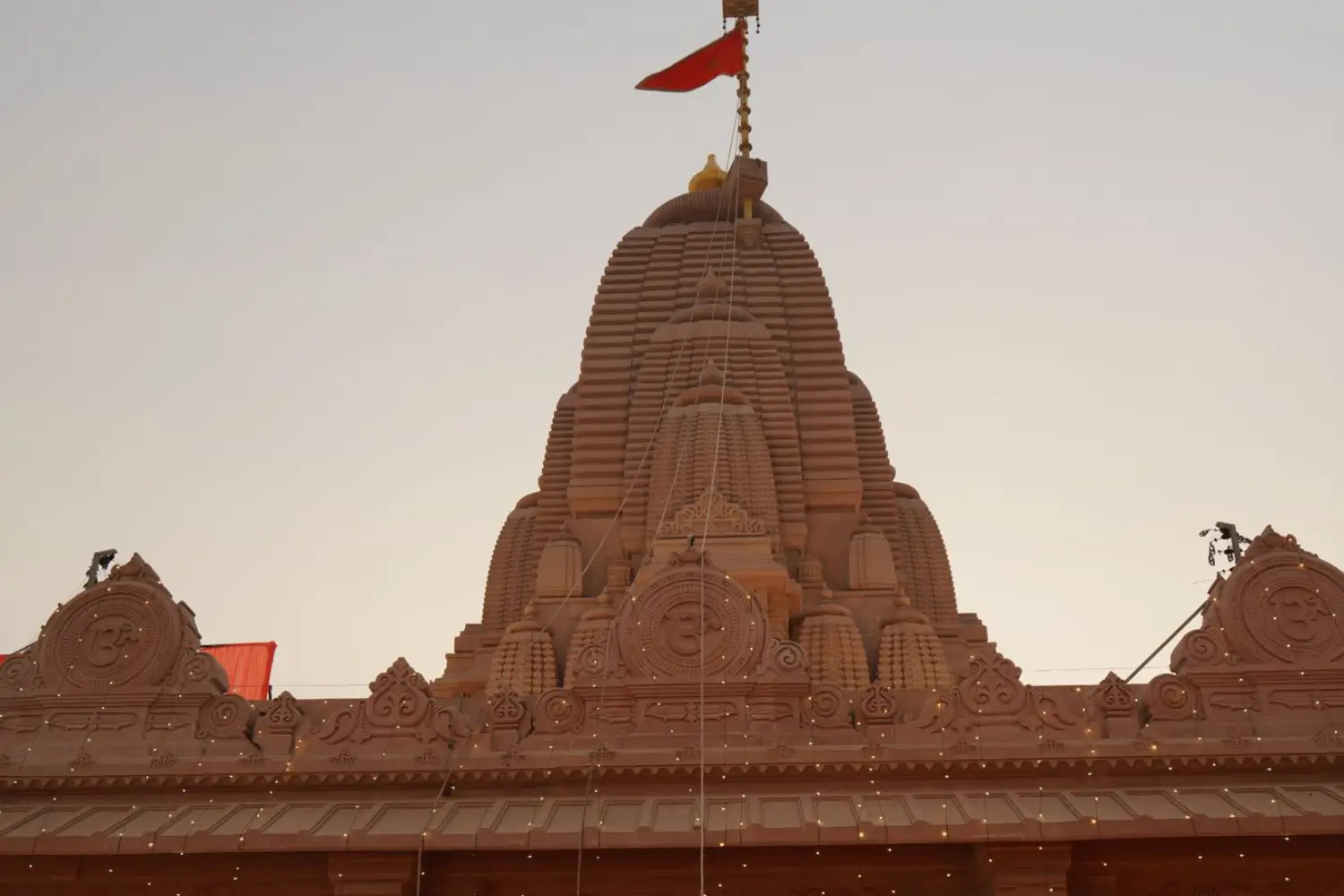
This is the cluster most visitors do not know about, and it is arguably the most narratively rich part of the complex. The Sapt Mandapam is a pavilion housing seven individually consecrated shrines, each dedicated to a sage or companion from Ram's life. All seven were consecrated on June 5, 2025. Together, they turn the complex into a physical retelling of the Ramayana, with each figure representing a different chapter or moral dimension of the epic.
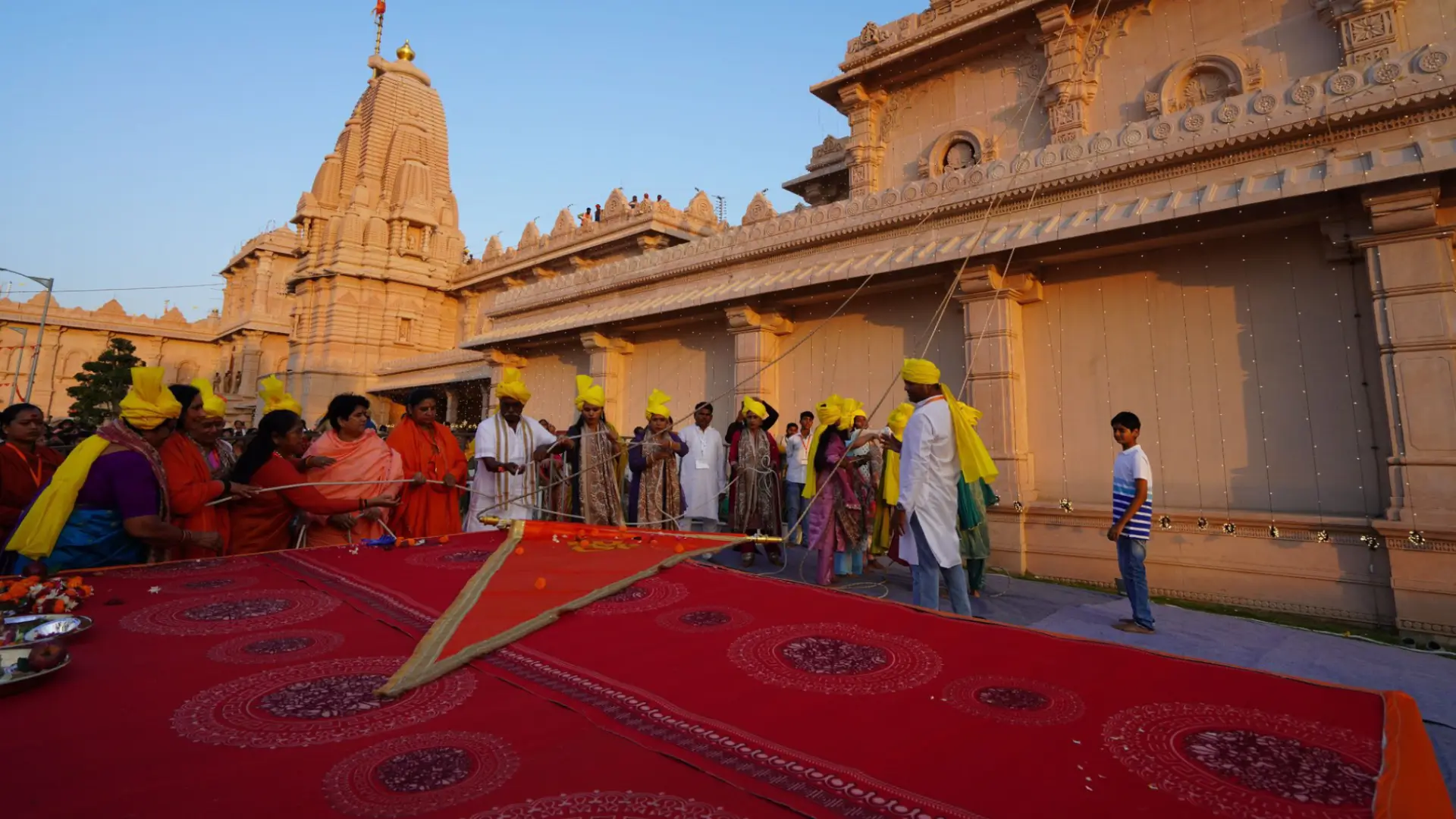
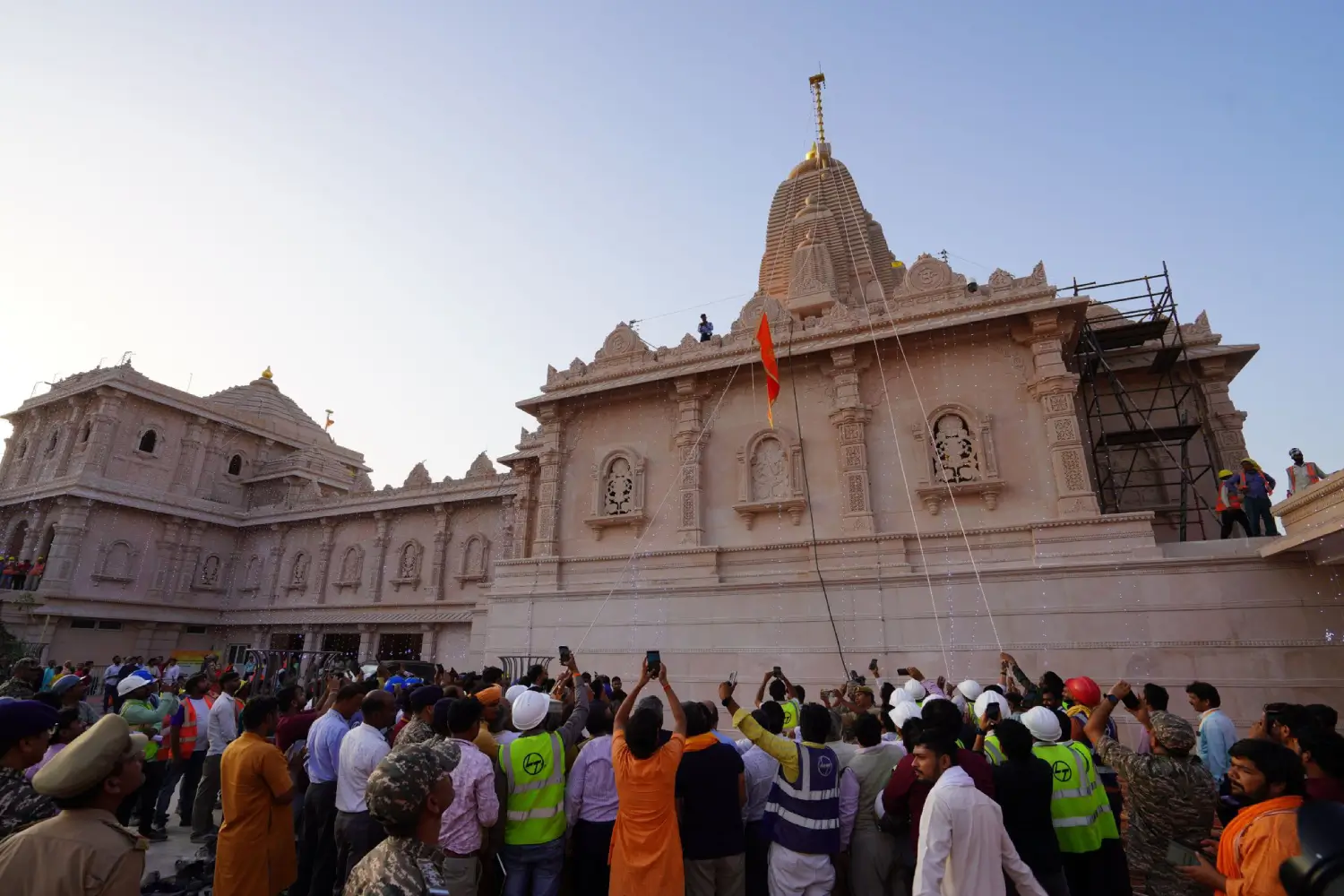
The Sheshavatar TempleThis standalone temple, also consecrated on June 5, 2025, houses Lakshman in his divine form as Sheshavatar, the incarnation of the cosmic serpent Shesha on whose coils Lord Vishnu reclines. The temple's gold work was still being finished as of late 2025, and a flag-hoisting ceremony was held here in June 2026. It is one of the few temples in India that presents Lakshman not as Ram's younger brother but in his independent theological identity.
The Kuber Tila Shiva Temple and the Jatayu StatueIn the southwestern part of the complex, an elevated mound called Kuber Tila holds an ancient Shiva temple that predates the current construction. The Trust restored this temple and installed a bronze statue of Jatayu on the hillock. Prime Minister Modi offered prayers here and performed jalabhishek (ritual bathing of the Shiva linga) before the Ram Lalla consecration on January 22, 2024.
Jatayu is the mythical vulture king who tried to stop Ravana from abducting Sita and was fatally wounded in the attempt. The Trust chose to install his statue at Kuber Tila because Jatayu's sacrifice is considered the Ramayana's defining act of selfless duty (dharma). The statue is visible from a considerable distance within the complex and has become a landmark in its own right.
Sita KoopNear the main temple stands Sita Koop, a historic well that tradition associates with Sita's time in Ayodhya. It is not a temple in the formal sense (there is no idol or consecrated deity), but it is a significant devotional stop within the complex and one of the older surviving structures on the grounds. Most guided tours of the complex include a stop here.
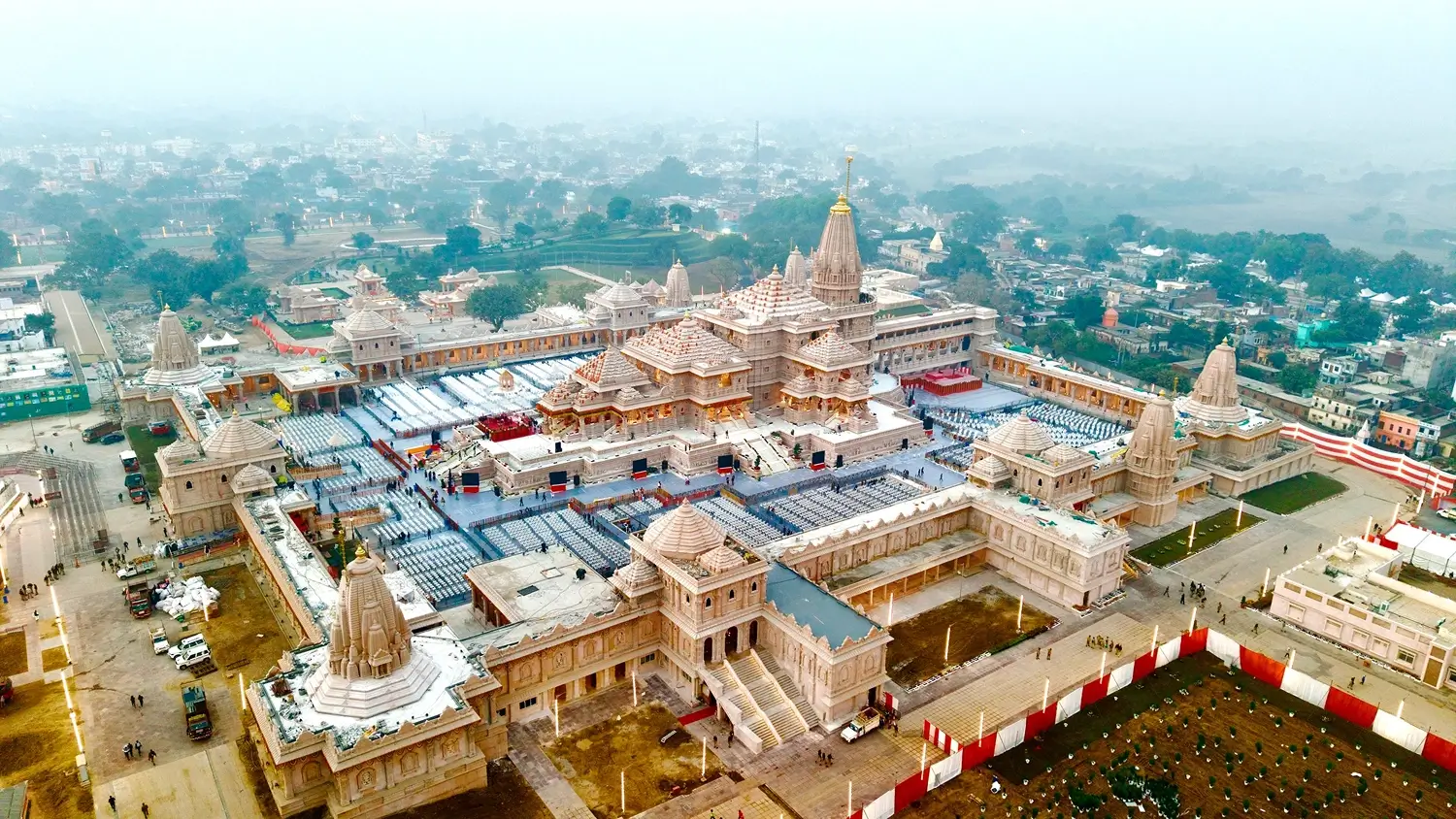
The complex is not finished. As of mid-2026, the Parkota wall is largely complete, but the museum (Ram Katha Kunj), the auditorium, the guest house, and portions of the 30-acre green landscaping inspired by the Panchavati of the Treta Yuga are still being built or finished. Exterior murals depicting the Ramayana are being installed along the lower plinth. The Trust has stated that the full complex buildout is ongoing, though no firm completion date has been announced for all ancillary structures.
Get the Best Deals on Ayodhya Holiday Packages. Request for free quotes.
The Ram Janmabhoomi complex currently contains the main temple (with Ram Lalla on the ground floor and Ram Darbar on the first floor), six Parkota shrines (Surya, Bhagwati, Ganesh, Shiva, Annapurna, Hanuman), seven Sapt Mandapam temples (Vashishtha, Valmiki, Vishwamitra, Agastya, Ahalya, Shabari, Nishadraj), the Sheshavatar Temple for Lakshman, and the restored ancient Shiva temple at Kuber Tila. In total, the complex holds more than 15 independently consecrated temples and shrines across 70 acres.
The complex houses shrines to Ram (as both child and adult king), Surya Dev, Devi Bhagwati, Ganesh, Shiva (two separate temples), Maa Annapurna, Hanuman, and Lakshman in his Sheshavatar form. The Sapt Mandapam adds temples for the sages Vashishtha, Valmiki, Vishwamitra, and Agastya, along with the revered figures Ahalya, Shabari, and Nishadraj.
Beyond the main Ram Lalla and Ram Darbar sanctums, the six Parkota shrines at the corners and arms of the compound wall are the most prominent. The Sapt Mandapam cluster of seven sage temples, the standalone Sheshavatar Temple for Lakshman, and the ancient restored Shiva temple at Kuber Tila (with its bronze Jatayu statue) complete the inventory. Sita Koop, a historic well near the main temple, is a devotional stop but not a consecrated shrine.


