Haridwar Ardh Kumbh 2027 : The Pilgrim's Planning Guide

Haridwar Ardh Kumbh 2027

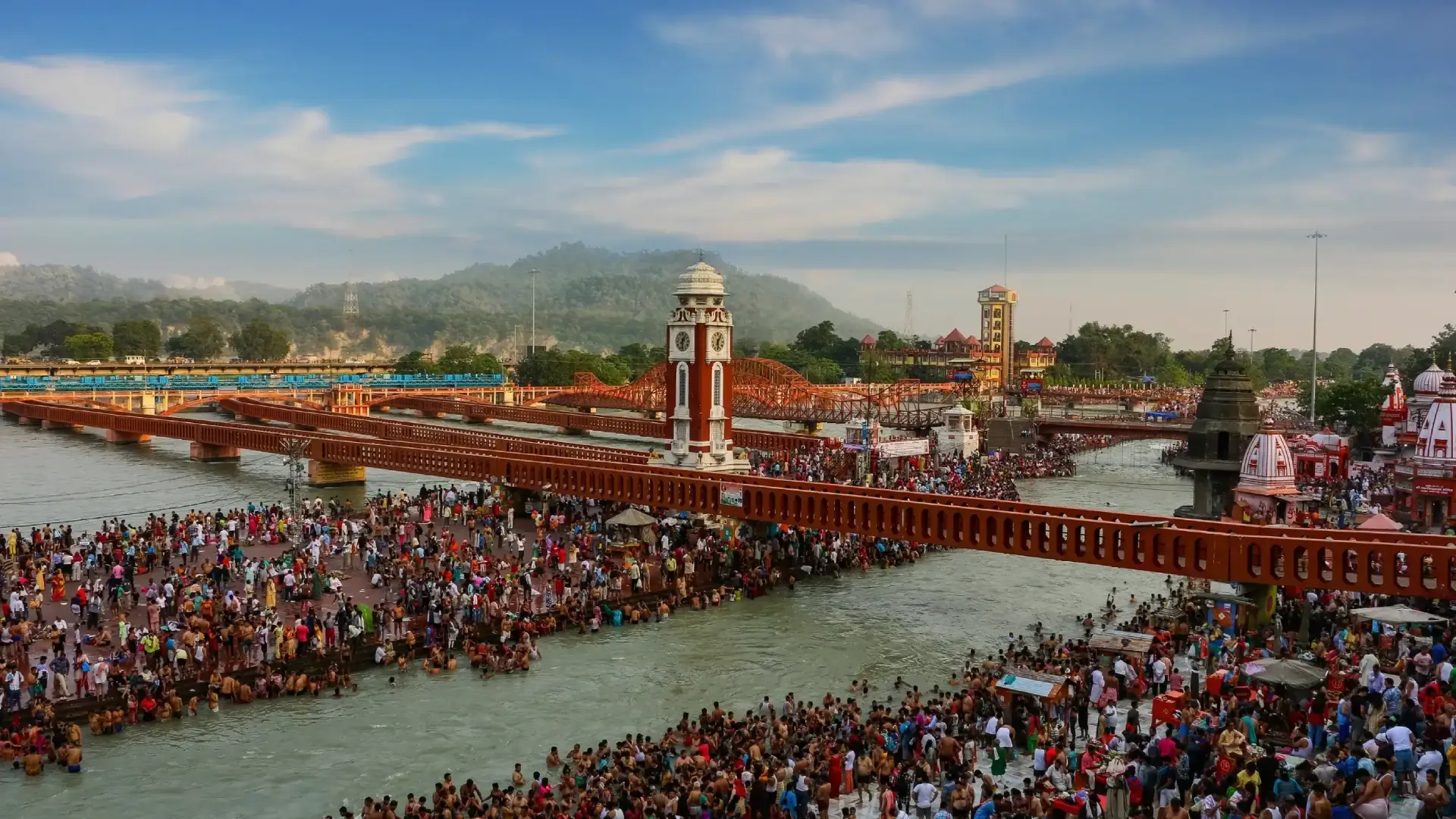
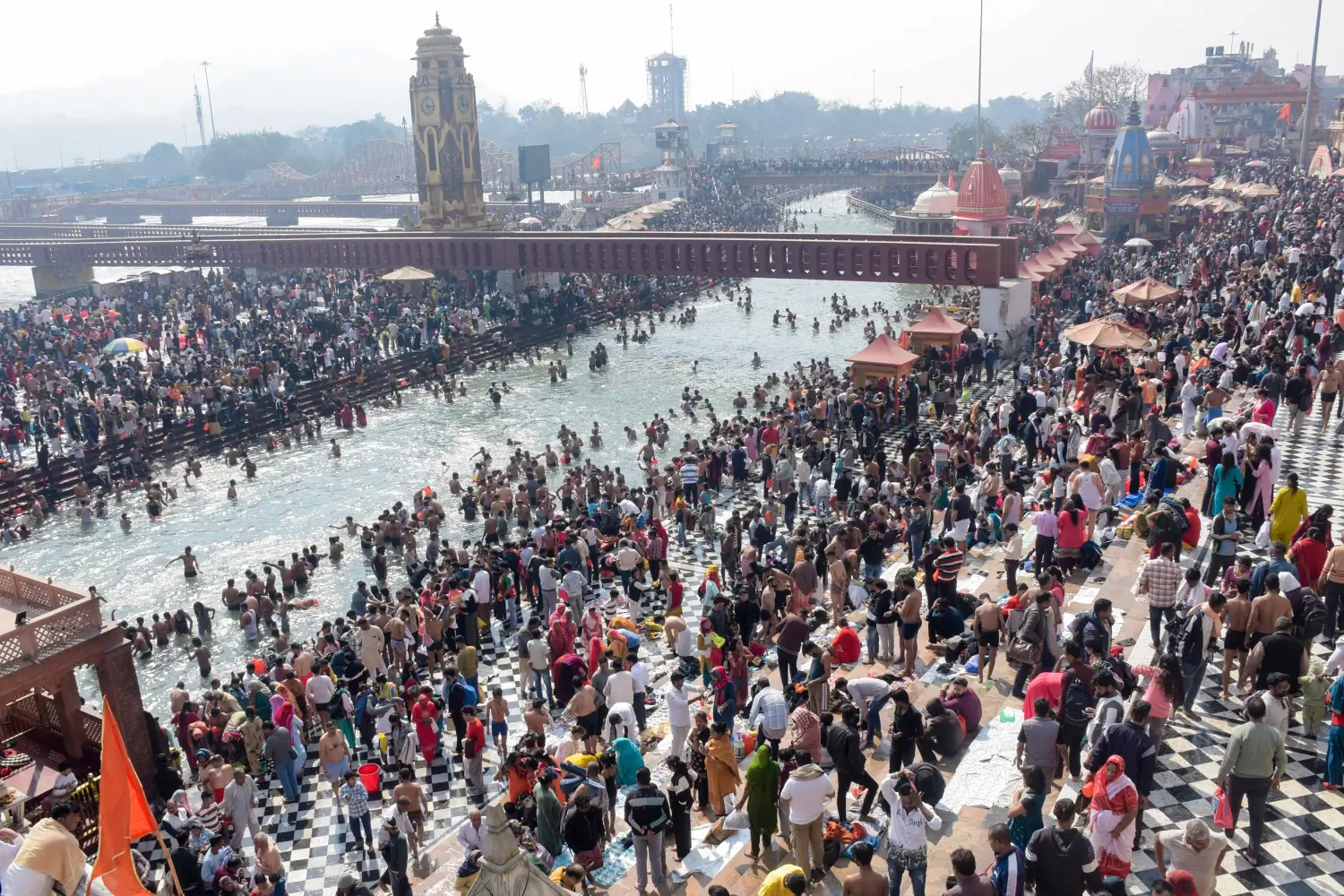
Haridwar has hosted the Ardh Kumbh before, but never quite like this. From 14 January to 20 April 2027, the city will hold what is technically an Ardh Kumbh but will operate at the scale, staffing, and ritual weight of a full Purna Kumbh, following a joint decision between Uttarakhand Chief Minister Pushkar Singh Dhami and the Akhil Bharatiya Akhara Parishad. Across 97 days, all 13 Akharas will participate in a complete Amrit Snan cycle typically reserved for the 12-year Purna Kumbh, and around 10 crore pilgrims are expected across the ten major bathing days.

If you are planning to attend, treat 2027 as a full Kumbh in every practical sense. Book earlier than you think you need to. Walk further than you expect. Read the calendar carefully before you fix your dates. This guide covers the verified schedule, ghat access, transport, accommodation, safety rules, and paperwork you need before you leave home.
What's Different About the Haridwar Kumbh 2027

The Sacred Six: Ayodhya's Must-Visit Temples

Four things set the 2027 event apart from every previous Haridwar Ardh Kumbh, and each one changes how you plan.
  • "Amrit Snan" replaces "Shahi Snan." For the first time, the Uttarakhand government and the 13 Akharas have jointly retired the Persian-origin term "Shahi Snan" (Royal Bath) and adopted "Amrit Snan" (Nectar Bath) across all official records, signage, and security schedules. The ritual is unchanged. The name is not. If you are searching for older schedules or news, both terms refer to the same three ascetic-led bathing dates.
  • Purna-scale operations on an Ardh cycle. All 13 Akharas will process and bathe on a full Amrit Snan schedule, which historically only happens once every 12 years. Every operational parameter, from tent city size to police deployment to pontoon bridges, is being built to Purna Kumbh specification.
  • Digital and Green Kumbh design. The mela area is being divided into 32 autonomous sectors, each with its own hospital, police outpost, and sanitation hub. A centralized command center will use AI-based crowd-density monitoring on pontoon bridges and choke points to detect stampede risks before they escalate. Single-use plastic will be restricted across the mela (fair)grounds.
  • A hard 68 km vehicle lockdown on Amrit Snan days. No private vehicle will be allowed within 6 to 8 km of Har Ki Pauri on the three Amrit Snan dates. Plan to park at outer lots and walk in.

Mythological and Astrological Background

Mythological and Astrological Background

Every Kumbh is timed to a specific planetary window. Hindu tradition holds that during the churning of the cosmic ocean (Samudra Manthan), drops of amrit, the nectar of immortality, fell at four sites on Earth: Haridwar, Prayagraj, Nashik, and Ujjain. Haridwar's drop is believed to have touched the waters at Brahmakund, the central pool at Har Ki Pauri.

The Haridwar Kumbh is celebrated when Jupiter (Brihaspati) enters Aquarius (Kumbh) and the Sun (Surya) enters Aries (Mesh). In 2027, the peak of this cosmic window falls on 14 April (Mesh Sankranti), which is why that day is regarded as the single most spiritually potent bathing date of the four-month festival. This astrological alignment is also why the Haridwar Kumbh cannot simply be moved: the window opens roughly once every six years for the Ardh and once every twelve for the Purna, and the ritual calendar is built around it.

The full retelling of the Samudra Manthan is worth reading separately. For the purposes of this guide, what matters is that the dates below are not arbitrary. They are the days on which the Ganga is believed to carry its highest spiritual charge, and it is around them that the entire logistics of the mela are organized.
The Official Bathing Calendar

The Official Bathing Calendar

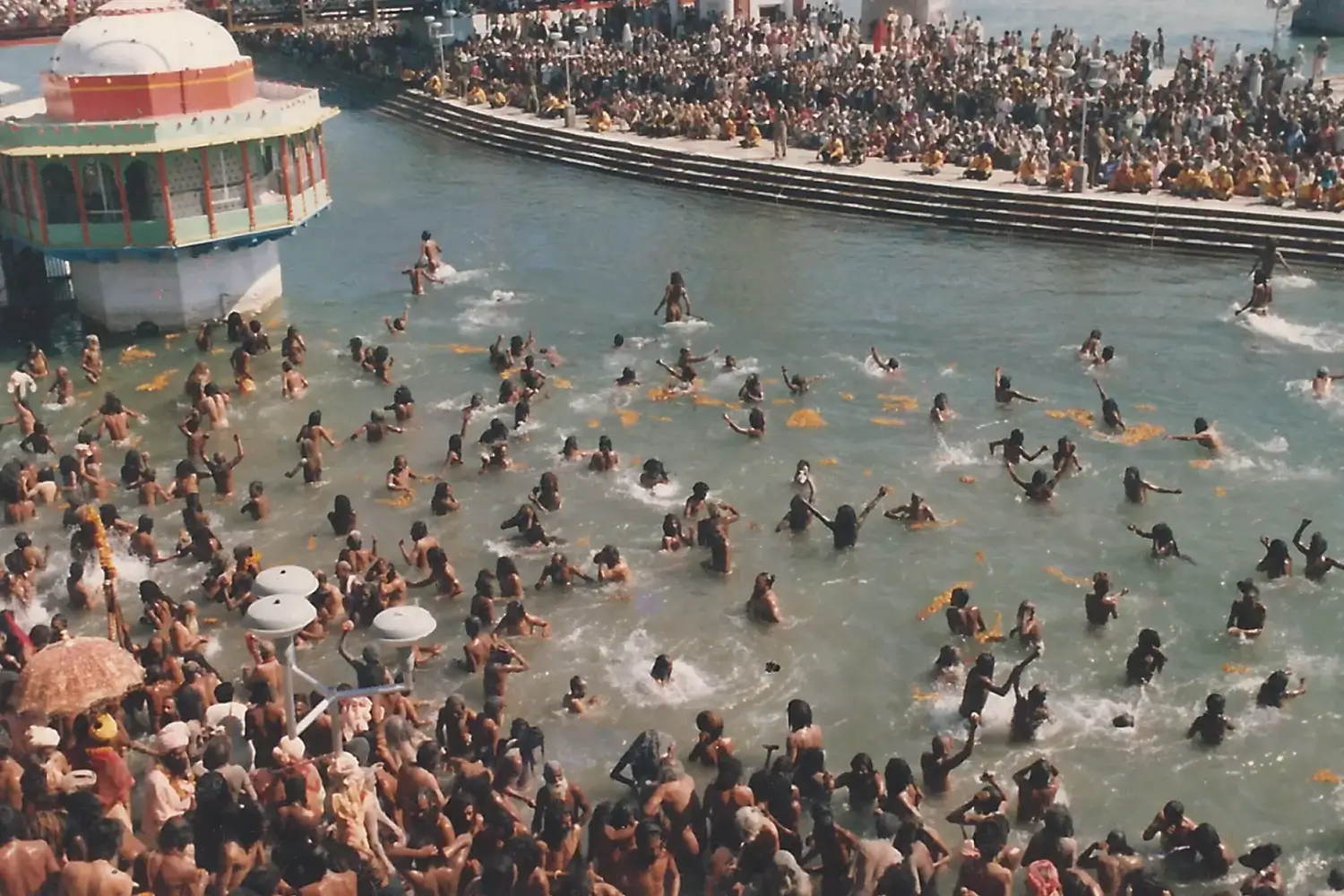
The 2027 schedule has ten major bathing days across 97 days. Three are Amrit Snans, led by the Akharas. The other seven are auspicious public snans of varying intensity. Use this table to plan around crowd levels rather than around a single "best" date.

Date Day Occasion Type What to Expect
14 January 2027 Thursday Makar Sankranti Opening bath Heavy but manageable. First-day energy, cold weather, and full akhara camps not yet set up.
6 February 2027 Saturday Mauni Amavasya Major public snan Very heavy crowds. One of the most spiritually potent Amavasya days.
11 February 2027 Thursday Basant (Vasant) Panchami Auspicious bath Moderate to heavy. Weather begins to warm.
20 February 2027 Saturday Magh Purnima Auspicious bath Moderate to heavy. Popular full-moon bath.
6 March 2027 Saturday Mahashivratri 1st Amrit Snan Extreme. Akhara processions from dawn. Vehicle lockdown active.
8 March 2027 Monday Somvati Amavasya (Phalgun) 2nd Amrit Snan Extreme. Rare Monday Amavasya, considered highly meritorious.
7 April 2027 Wednesday Nav Samvatsar (Chaitra Shukla Pratipada) Auspicious bath Moderate. Hindu New Year.
14 April 2027 Wednesday Mesh Sankranti / Baisakhi 3rd Amrit Snan The single largest expected gathering of the mela. Peak cosmic window.
15 April 2027 Thursday Ram Navami Auspicious bath Heavy carry-over from previous day.
20 April 2027 Tuesday Chaitra Purnima Closing bath Heavy. Marks the formal end of the mela.

Only the three Amrit Snans (6 March, 8 March, and 14 April) will see the full vehicle lockdown and the akhara procession sequence. On the other seven bathing days, movement is restricted but not sealed.

Practical rule of thumb. If your goal is to witness the mela at its most intense and photograph the akhara processions, aim for 6 March or 14 April. If your goal is a quieter, more contemplative dip and the fullest ashram experience, plan for a Kalpwas stay (a month-long spiritual residence) or pick a non-snan day between 15 February and 5 March. Families with elderly members or young children should avoid the three Amrit Snans entirely.
The 13 Akharas and How the Amrit Snans Work

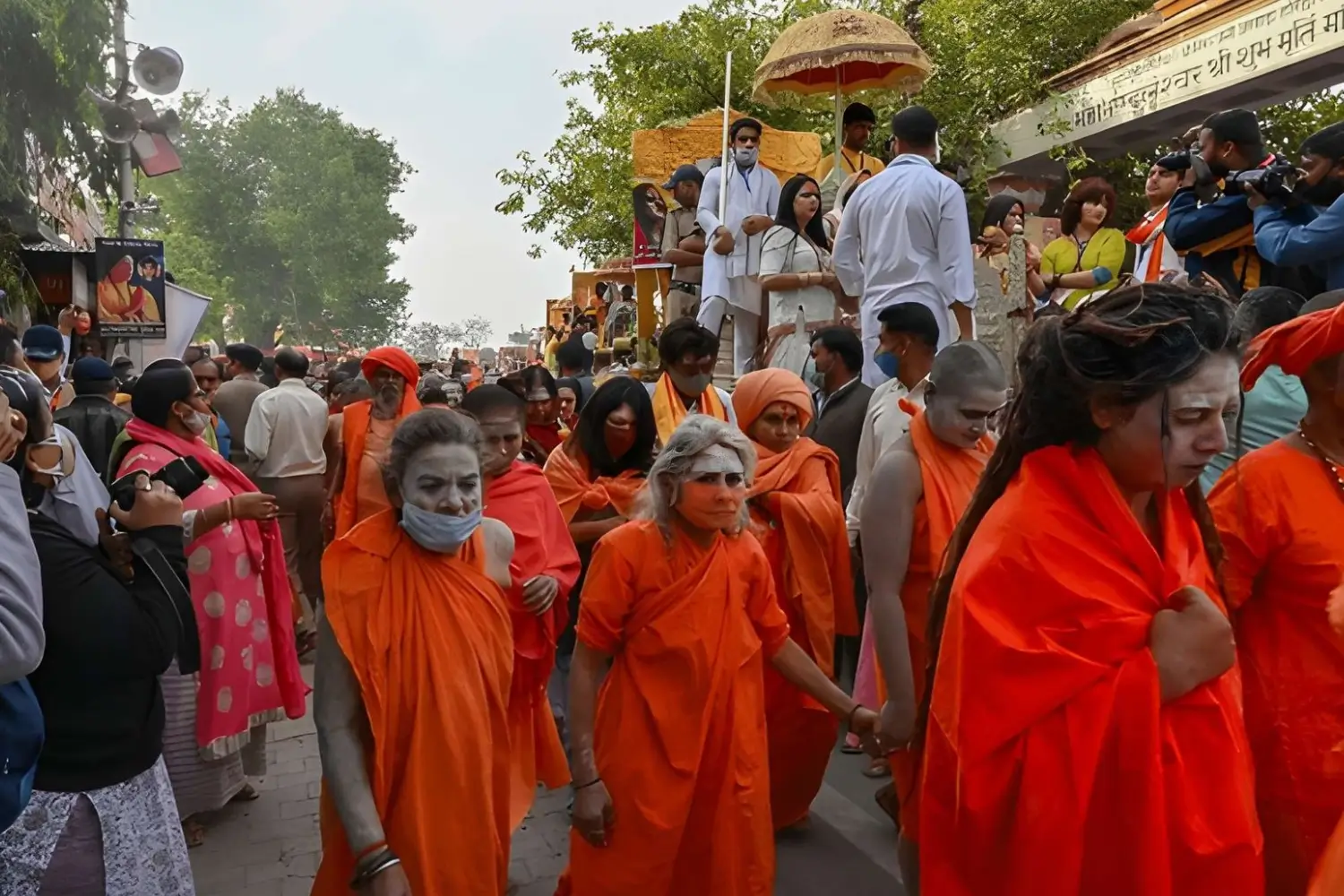
The Amrit Snan is a choreographed procession, not an open bath. The 13 Akharas, grouped into three sects, arrive at Har Ki Pauri in a strict pre-decided order.

  • Shaiva Akharas (followers of Shiva) : Juna Akhara is the largest and leads. Followed by Niranjani, Mahanirvani, and others. The Naga Sadhus, ash-covered warrior ascetics, march with these.
  • Vaishnava Akharas (followers of Vishnu) : Include the three Bairagi Anis, which camp separately in the Bairagi Camp zone.
  • Udaseen Akharas (followers of Chandra Dev, tracing lineage to Guru Nanak's son Sri Chand) : Bathe last in the sequence.

Each akhara is allotted a precise window at the ghat. Civilian bathing at Har Ki Pauri is completely suspended from roughly 3:00 am to mid-afternoon on Amrit Snan days while the processions move through. Pilgrims who wish to bathe on the same day must use alternate ghats (see the ghat guide below) or wait for the akharas to complete their sequence.
Ghat Guide : Where to Bathe

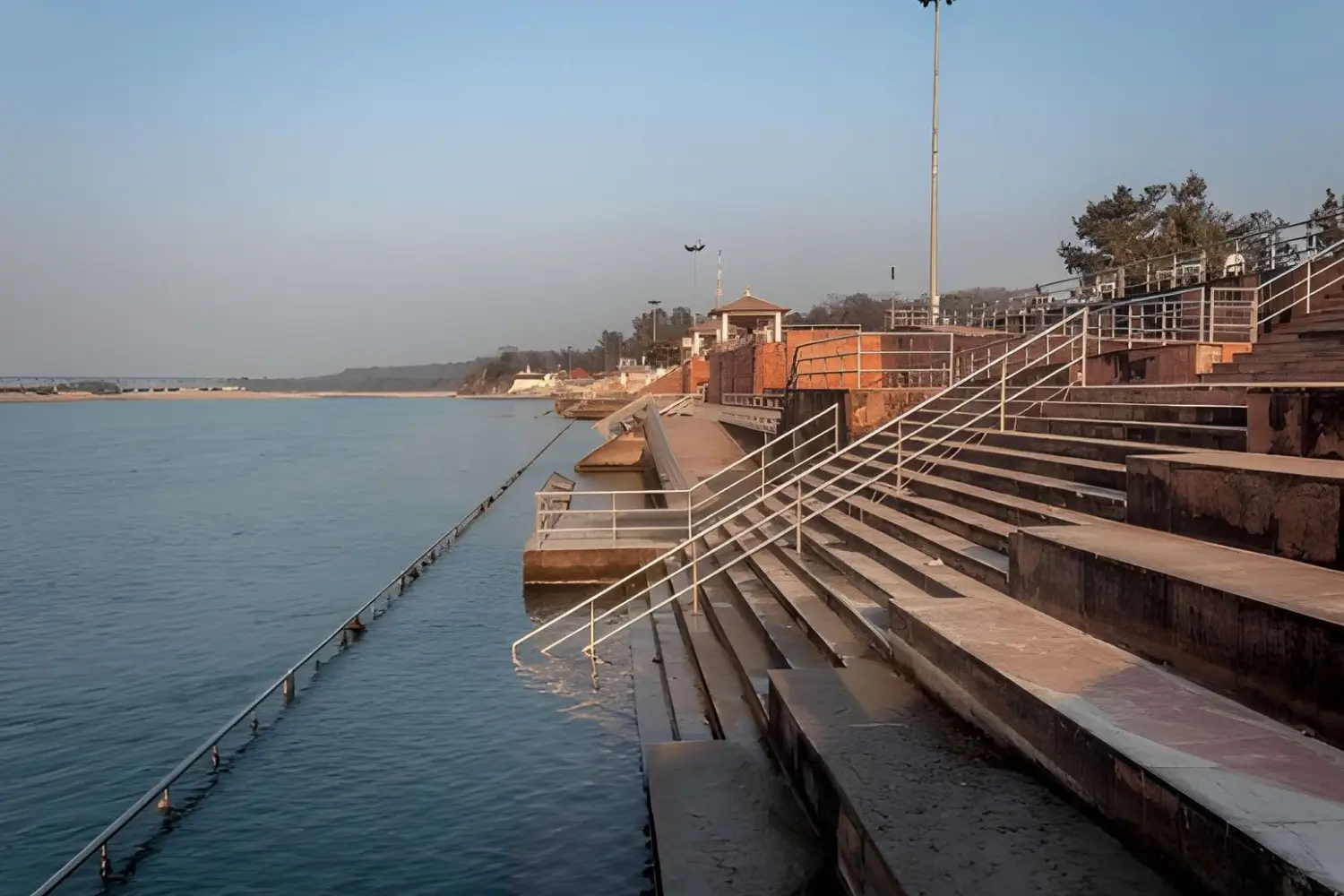
Har Ki Pauri is the spiritual center, but it is neither the only option nor the easiest one on peak days. Haridwar has a full network of ghats along the Ganga, and knowing them changes your experience.

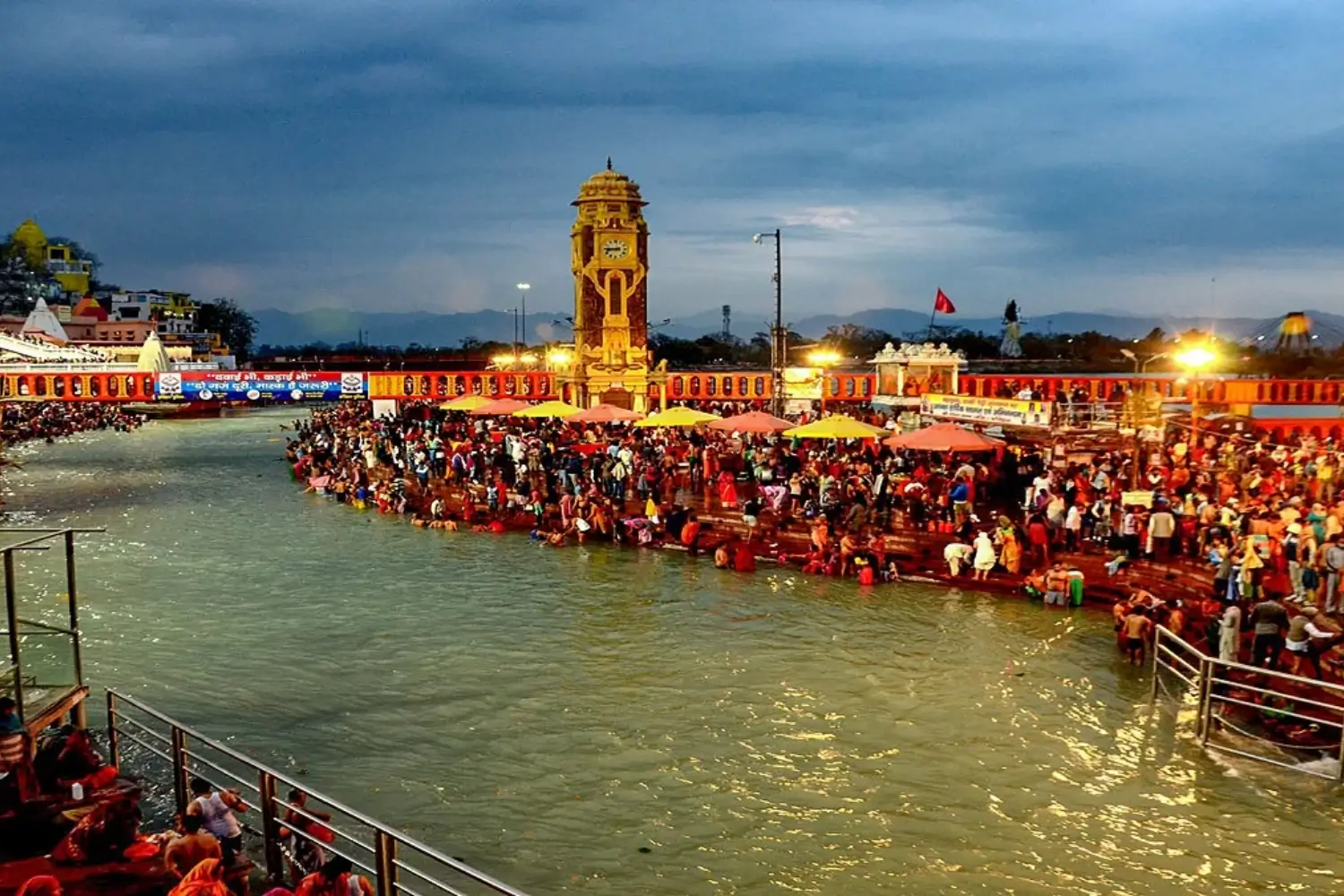
  • Har Ki Pauri (Brahmakund) : The main bathing complex and the site of the daily Ganga Aarti. Closed to civilian bathing during Amrit Snan processions. Access is controlled by pass-based entry on major bathing days.
  • Malviya Ghat and Subhash Ghat : Immediately adjacent to Har Ki Pauri, part of the same complex. Absorb overflow crowds.
  • Kushavarta Ghat (Kankhal): South of the main city, associated with Daksha Prajapati. Quieter and often preferred by families performing ancestral rites.
  • Bhimgoda Ghat : North of Har Ki Pauri, upstream. Faster current, calmer crowds, and popular with pilgrims who want a Har Ki Pauri-adjacent experience without the density.
  • Gau Ghat and Narayani Shila Ghat : Traditional ghats for pind daan and ancestral offerings.
  • Chandi Ghat and Bhupatwala Ghat : Further out, quieter still, and reachable on foot on lockdown days.

For any of the ten major bathing dates, plan to be at your chosen ghat by 4:00 to 5:00 am. Ghats fill hours before official sunrise, and the police close approach roads once density thresholds are hit.

Getting to Haridwar
  • By air : Jolly Grant Airport in Dehradun is the nearest, about 40 km away, with prepaid taxi counters that will operate at expanded capacity for the mela. International visitors typically fly into Delhi's Indira Gandhi International Airport (about 220 km) and continue by train or car.
  • By rail : Haridwar Junction is one of northern India's busiest stations, with direct trains from Delhi, Mumbai, Kolkata, Chennai, and most state capitals. Indian Railways will run special Kumbh Mela trains and add halts at nearby stations (Motichur, Roorkee, and Jwalapur) around all ten bathing dates. Book two to three months ahead for peak-day travel.
  • By road : Haridwar is well connected by National Highway 334 and NH-58. Expect controlled entry routes and diversions on all ten major bathing days. On the three Amrit Snans, heavy vehicles will be barred from entering city limits.
Where to Stay?

Accommodation determines your logistics more than any other single choice. Areas near Har Ki Pauri and Upper Road are the most convenient but the first to sell out.

  • Tent cities

The state administration and private operators will set up extensive temporary tent cities across the 32 mela sectors. Options range from basic dormitory cots to Swiss cottages with attached bathrooms and heaters. Book through the official Ardh Kumbh portal once it opens.

  • Ashrams

Traditional and calm, with early check-in, strict vegetarian meals, and a no-alcohol rule. Popular ashrams like Shantikunj, Patanjali Yogpeeth, and Sapt Rishi Ashram accept advance bookings from committed pilgrims, often several months out.

  • Hotels and dharamshalas

Standard hotels are concentrated around Upper Road, Ranipur More, and Jwalapur. Rates on and around Amrit Snan dates will run three to five times normal. Dharamshalas offer the most budget-friendly option but book out earliest.

  • Kalpwas accommodation

For pilgrims committing to the traditional month-long spiritual residence, dedicated Kalpwasi camps will be set up in the Bairagi Camp zone with expanded water and sanitation infrastructure.

When to book : Finalize accommodation at least four to six months ahead of your travel dates. For any night that falls within 48 hours of an Amrit Snan, expect availability to close by October 2026.

Moving Around During the Mela

Local transport during the mela does not resemble ordinary Haridwar in any way.

  • On ordinary bathing days, e-rickshaws, shared jeeps, and shuttle buses operate on designated corridors. Har Ki Pauri and the surrounding lanes remain pedestrian-only.
  • On the three Amrit Snans, private vehicles are barred within a 6 to 8 km radius of Har Ki Pauri. Pilgrims park at designated outer lots and walk in. Shuttle buses will operate on limited fixed routes.
  • Pontoon bridges connect the two banks of the Ganga across the mela sectors and are monitored by AI density sensors. During peak hours these bridges become one-way corridors.
  • Do not rely on ride-hailing apps for peak days. Mobile networks are heavily congested, and drivers cannot enter the lockdown zone anyway.
Documents, Packing, and Money
  • Carry a physical government-issued photo ID (Aadhaar, passport, or driver's license) at all times. Digital copies alone may not suffice at pass-controlled entry points on Amrit Snan days.
  • Printed reservations. Print your hotel confirmation and train tickets. Mobile networks fail during peak crowds, and QR codes often will not load.
  • Carry small-denomination cash for local transport, prasad, and street purchases. UPI works most of the time but not always at the ghats on peak days.
  • Winter kit for January and February. Haridwar's dawn temperatures drop to 4 to 8 degrees Celsius. A heavy jacket, thermals, a woollen cap, and gloves are essential for early-morning baths. Bring a quick-dry towel and a change of clothes in a waterproof bag.
  • Warm-weather kit for April. Daytime temperatures rise to 32 to 38 degrees Celsius. Light cotton, a wide-brim hat, high-SPF sunscreen, and a refillable water bottle.
  • Carry a personal medical kit including ORS sachets, basic pain relievers, motion sickness tablets, and any prescription medication in original packaging with a doctor's note.
  • Comfortable, closed-toe walking shoes. On peak days you may walk 10 to 15 km across the day.
Safety and Special Guidance
  • Families with elderly parents or young children : Skip all three Amrit Snans without exception. Plan your visit for a mid-week non-snan day between 15 February and 5 March, when the mela is at full swing but crowd density at Har Ki Pauri is manageable. Choose accommodation within walking distance of Kushavarta or Bhimgoda Ghat and bathe there instead of at the main complex.
  • Women travelers : The mela is heavily policed and generally safe, but density-related risks (crush, disorientation, separation from group) are the primary concern rather than crime. Travel with a known contact, agree on a fixed meeting point if separated, and carry a whistle. Female-only bathing enclosures are demarcated at all major ghats.
  • Foreign nationals : No special permit is required for Haridwar. Carry your passport at all times. Register at your accommodation on arrival. If you plan to attend an Amrit Snan procession, arrive at your designated viewing zone well before 4:00 am and expect to remain in place for several hours.
  • First-timers : Do not attempt an Amrit Snan bath on your first Kumbh. Attend one as an observer from a designated public viewing area, then bathe on an ordinary non-snan day or an auspicious secondary date like Magh Purnima or Ram Navami.
  • Medical : Every one of the 32 sectors will have a dedicated hospital and first-aid post. Note the sector number of your accommodation. In an emergency, sector-based response is faster than trying to reach a central hospital.
Key Temples and Nearby Religious Sites

Set aside at least one non-snan day for these. Ropeway timings and entry fees will be published closer to the mela dates.

  • Mansa Devi Temple : On Bilwa Parvat, reachable by ropeway or a 1.5 km climb. Fulfilment-of-wishes temple, extremely popular during the mela.
  • Chandi Devi Temple : On Neel Parvat across the Ganga, also served by a ropeway. It offers the widest panoramic view of the Mela sectors below.
  • Maya Devi Temple : The presiding deity of Haridwar and one of the oldest temples in the city, located near Har Ki Pauri.
  • Daksha Mahadev Temple (Kankhal) : An ancient Shiva temple with heavy activity on Mahashivratri. Associated with the Daksha Yagna legend.
  • Bharat Mata Mandir : A multi-storey temple dedicated to Mother India, unusual among Haridwar's shrines and worth a short visit.
  • Shantikunj Ashram : Founded by Pandit Shriram Sharma Acharya, a major centre for yoga, meditation, and Vedic studies. Open to visitors.
  • Patanjali Yogpeeth : Large Ayurveda and yoga campus on the outskirts, on the route to Roorkee.
  • Sapt Rishi Ashram : Marks the traditional site where the Ganga split into seven streams to avoid disturbing the seven sages in meditation.
Other Interesting Blogs to Read
Populer Destination Frequently Asked Questions

Ayodhya Ram Mandir Visit 2026

Finalise both at least four to six months ahead. For any night within 48 hours of the 6 March, 8 March, or 14 April Amrit Snans, expect availability to close by October 2026. Book through IRCTC's tatkal window as a fallback for train tickets.

None ritually. The Uttarakhand government and the 13 Akharas jointly replaced "Shahi Snan" (a Persian-origin term meaning royal) with "Amrit Snan" (Sanskrit for nectar) for the 2027 Ardh Kumbh. All official records, signage, and security schedules now use Amrit Snan. Older sources may still say Shahi Snan; they refer to the same three ascetic-led bathing dates.

On Amrit Snan days, Har Ki Pauri is closed to civilian bathing during the akhara processions. Kushavarta Ghat in Kankhal and Bhimgoda Ghat just upstream of the main complex are the two best alternates. Both carry the same sacred Ganga water, are less congested, and remain accessible on foot when the vehicle lockdown is in force.